Written by:

Jacek Chrusciany
Published
Read time
3 min

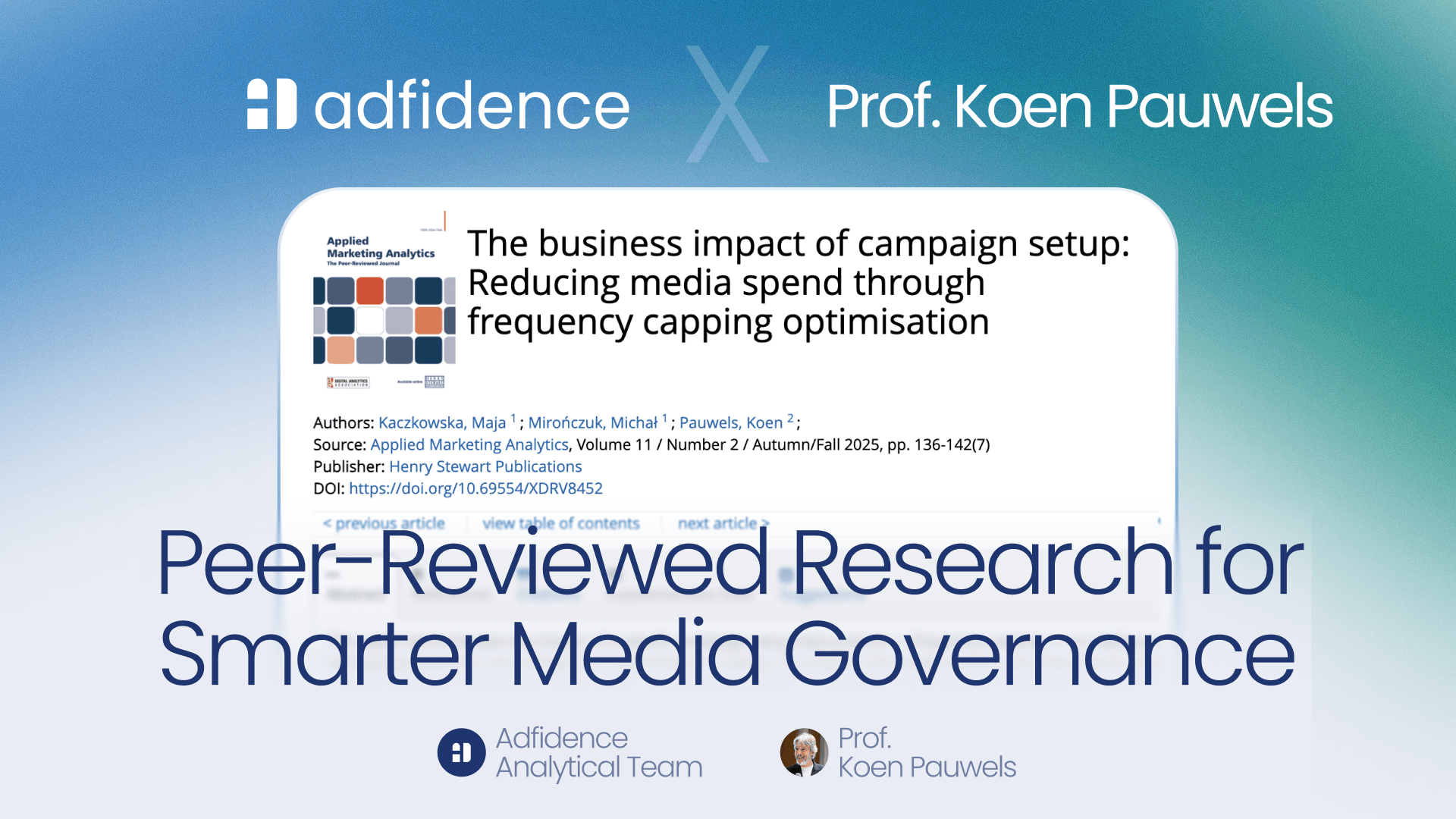
Our CEO and Co-Founder Jacek Chrusciany wrote an article “Limitations of YouTube Target Frequency”. It is the first one in a new column in The Association of National Advertisers (ANA) titled “Pathways to Transparent Media”.
Link to the original article: ANA launches new column by Adfidence CEO
A reprint of this article can be read below.
Campaign set up can be an undervalued element of digital advertising. In practice, it requires meticulous navigation of myriad options, each with a substantial but often under-explained impact on the campaign's success.
Yet these are the very details that can make or break the campaign. Done right, they boost ROI and brand relevance; done wrong, they lead to wastage and brand safety concerns.
Consider YouTube Target Frequency. It's an option for managing ad frequency on the platform, as the name implies. Google markets it as a way to boost ad viewership on YouTube, especially for brand awareness campaigns. The tool works across various ad types, allowing advertisers to set frequencies like two impressions per person per week.
Advertising science, dating from radio to digital, shows the importance of optimized frequency. A balance is crucial. Capping does matter. Too few exposures are weak, too many can backfire.
On top of this, the prevailing assumption is that frequency caps enhance data insights. They deepen advertising reports, aiding future campaign strategies. At its core, using this tool is about effective messaging and strategic data use.
All things considered, the YouTube tool seems to offer a "set it and forget it" benefit that delivers excellent ROI for messaging and enables strategic data use. Global heads of media often refer to it as the solution to reach consumers the right number of times – neither too few, nor too many. But our research reveals that the real-world impact of the tool paints a different picture.
After setting up a campaign that targeted three impressions per viewer, here were the outcomes it produced:
Precision Gap: Only a small fraction, about 13 percent, of viewers saw the ad exactly three times, raising questions about the accuracy of targeting.
Overexposure Trend: More striking is that over 40 percent of viewers encountered the ad five times or more. Despite aiming for a frequency of three, many people see the ad many more times than this target.
The main takeaway here is that advertisers should rethink relying on YouTube Target Frequency. It's not the surefire way to reach desired audiences at the right cadence it promises to be. The wiser choice is to set frequency caps directly.
Advertisers should also compare YouTube's approach with other digital platforms. A thorough analysis and comparison can help media buyers make the most effective and efficient allocations.
Of course, frequency capping and frequency targets are just one of many areas requiring close attention in the fast-evolving world of digital advertising. Staying current on the nuances of these platforms and how to manage and measure them is crucial for preventing wastage and ensuring brand safety. For those overseeing media buying, it's the key to shaping successful future strategies.